

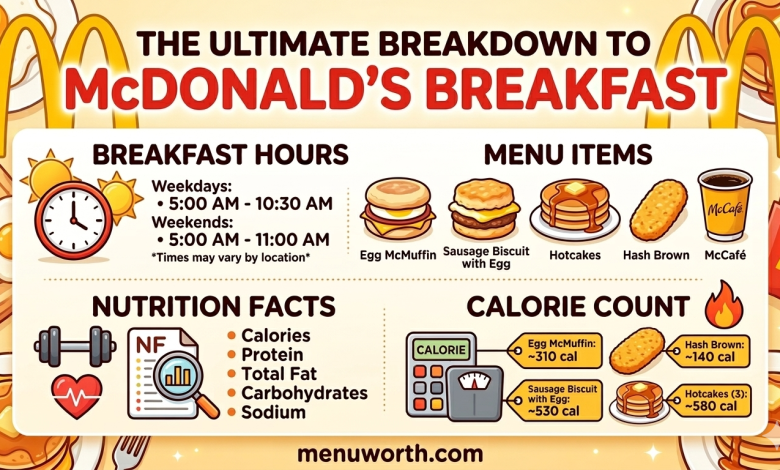
McDonald’s breakfast is one of the most consistent fast-food morning options worldwide—quick, familiar, and (depending on what you order) surprisingly easy to fit into different calorie goals and nutrition preferences.
But two questions confuse people every day:
- Timing: “What time does McDonald’s stop serving breakfast?”
- Nutrition: “What’s the best breakfast choice for calories, protein, sodium, and sugar?”
This guide answers both with practical detail, real numbers, and a simple decision framework you can reuse anywhere.
Important note: Breakfast items and hours vary by country—and often by individual restaurant—so treat this as a reliable general guideline, not a strict global rule.
McDonald’s Breakfast Hours: When It Starts and When It Ends
The most important rule: breakfast hours are local
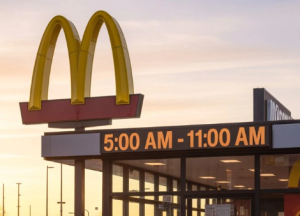
McDonald’s states that breakfast hours can vary by location, but breakfast is often served from opening time until 10:30 AM or 11:00 AM (local time).
That variation matters because:
- Some locations open earlier or later.
- Some markets use different cutoff times on weekends.
- Delivery apps may stop showing breakfast earlier than dine-in.
Why Breakfast Usually Ends in the Late Morning
One key operational reason is kitchen workflow. Breakfast items use different equipment and prep systems, and many restaurants set a cutoff (often around 11:00 AM) to switch smoothly to the main menu.
Breakfast Hours by Region (Real Examples)
Below are examples from official McDonald’s market pages. Your local restaurant may differ, but these show how breakfast windows are typically structured.
| Region (Example) | Typical Breakfast Window | Source |
|---|---|---|
| United States | Breakfast from 5:00 AM Until 10:30 AM or 11:00 AM (varies by location and weekends) | McDonald’s US FAQ |
| United Kingdom (24-hour restaurants) | Breakfast from 6:00 AM until 11:00 AM | McDonald’s UK FAQ |
| Singapore | Weekdays: 4:00 AM–11:00 AM; Weekends/PH: 4:00 AM–12:00 PM | McDonald’s Singapore |
How to Confirm McDonald’s Breakfast Hours in 30 Seconds (No Guesswork)
Use this quick checklist:
- Check the McDonald’s app / store locator (often shows menus by time).
- Check the delivery menu (Uber Eats/Foodpanda/etc.). If breakfast disappears, the cutoff has passed.
- Call the store if you’re on a tight schedule (travel days, early meetings).
What You Can Order on the McDonald’s Breakfast Menu
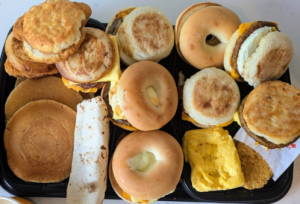
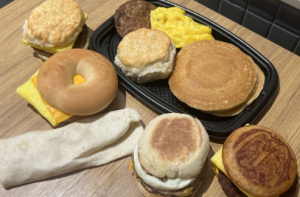
McDonald’s breakfast looks similar worldwide, but it’s more accurate to think of it as a set of menu families.
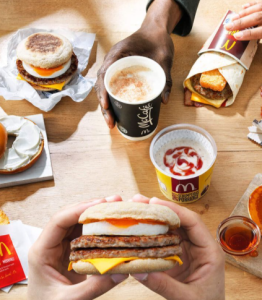
Breakfast Sandwiches (the main category)
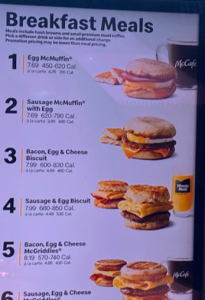
1) McMuffins
The classic formula: English muffin + egg + cheese + meat (optional).
Example: Egg McMuffin: 310 calories.
2) Biscuits
A softer, richer bread base. These often come with higher saturated fat and sodium, depending on the filling.
3) McGriddles
Sweet, maple-flavored griddle cakes. Tasty—but it’s easy to stack sodium + sugar, especially if paired with sweet drinks.
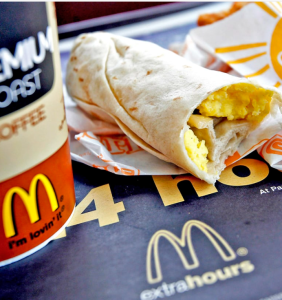
4) Wraps / Burritos (market-dependent)
Common in some countries. Often a middle-ground option—reasonable protein, but sodium can be high.
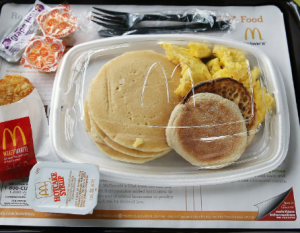
Breakfast Platters & Hotcakes
Hotcakes / pancakes
If you order hotcakes with butter and syrup, you’re essentially choosing a dessert-style breakfast: high carbs and sugar.
Example: Hotcakes & Sausage: 770 calories (U.S. listing).
Sides
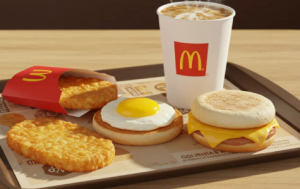
Hash Browns
Popular because they’re crispy, portable, and consistent.
Example: Hash Browns: 140 calories (U.S.).
Also worth noting: in the U.S., hash browns are typically sold only during breakfast hours.
Oatmeal (a “quietly strong” option)
McDonald’s Fruit & Maple Oatmeal is positioned as a whole-grain + fruit breakfast and is 320 calories (U.S.). It’s lower in sodium than many sandwiches, but higher in sugar.
Nutrition Reality Check: What Matters Most at McDonald’s Breakfast
If you want to choose smarter, focus on four numbers:
1) Calories
Calories determine whether a breakfast is “light,” “moderate,” or “heavy.”
2) Protein
Higher protein tends to keep you full longer and supports muscle maintenance.
3) Sodium
Sodium is the hidden limiter in fast-food breakfast. Many sandwiches can take up a large portion of daily sodium intake early in the day.
4) Sugar (especially with sweet breakfasts and drinks)
Hotcakes + syrup, sweetened coffees, and bakery-style items can push sugar up quickly.
Nutritional Information: Popular McDonald’s Breakfast Items (Calories + Macros)
The table below is a practical apples-to-apples snapshot (U.S.-style items), often referenced through nutrition databases and McDonald’s nutrition tools. Values can vary by country, recipe, and portion size.
| Food Item | Calories | Protein | Total Fat | Sat Fat | Carbs | Sugars | Sodium |
|---|---|---|---|---|---|---|---|
| Egg McMuffin | 310 | 17g | 13g | 6g | 30g | 3g | 770mg |
| Hash Browns | 140 | 2g | 8g | 1g | 18g | 0g | 310mg |
| Sausage McMuffin with Egg | 480 | 20g | 31g | 12g | 30g | 2g | 830mg |
| Bacon, Egg & Cheese Biscuit | 460 | 17g | 26g | 13g | 39g | 3g | 1330mg |
| Breakfast Sausage Burrito | 310 | 13g | 17g | 7g | 25g | 2g | 800mg |
| Hotcakes & Sausage (with butter & syrup) | 770 | 15g | 33g | 13g | 102g | 46g | 830mg |
| Fruit & Maple Oatmeal | 320 | 6g | 4.5g | 1.5g | 64g | 31g | 150mg |
| Bacon, Egg & Cheese McGriddles | 430 | 17g | 21g | 9g | 44g | 15g | 1230mg |
“Best Choice” Rankings (Using Real Data)
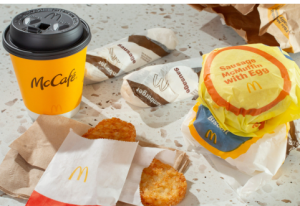
Best protein-to-calorie ratio
Egg McMuffin delivers strong protein density (17g at 310 calories) and is widely considered one of the most balanced choices.
Real-world example: If you have a long commute and won’t eat again for 4–5 hours, protein density often matters more than simply choosing the lowest calories.
Lowest-sodium “easy” option
Fruit & Maple Oatmeal is relatively low in sodium (150mg), but it is also higher in sugar (31g). That isn’t automatically “bad”—it just changes who it suits best.
Best choice to avoid a sugar spike
Avoid dessert-style breakfasts like Hotcakes & Sausage with syrup (46g sugar). Choose savory items and keep drinks unsweetened.
If you’re watching saturated fat
Saturated fat can add up quickly with biscuit-based options. A single sandwich can take up a significant portion of daily saturated fat limits.
Pros and Cons of McDonald’s Breakfast (Honest Breakdown)
Pros
- Consistency: Easy to plan calories because the menu is predictable.
- Protein options exist: Egg-based sandwiches can be fairly balanced.
- Portion control is straightforward: One sandwich + black coffee is simple.
Cons
- Sodium can be very high: Some items exceed 1,200 mg sodium per sandwich.
- Processed meats are common: Bacon/sausage options often raise saturated fat and sodium together.
- Sugary breakfasts stack fast: Pancakes + sweet drinks can become a calorie-and-sugar overload.
Smarter Ordering Strategy (Use This Every Time)
The 3-step “Build a Better McDonald’s Breakfast” method

Step 1: Choose your base (pick 1)
- Protein-focused: Egg McMuffin
- Comfort-focused: McGriddles (higher sugar/sodium)
- Lower-sodium base: Oatmeal (watch sugar)
Step 2: Add a side only if it has a purpose
- If you already have a sandwich, hash browns may be unnecessary.
- Hash browns can make sense if you need extra energy (physically active morning).
Step 3: Be intentional with your drink
- Black coffee / unsweetened tea: close to zero calories
- Sweet coffees: can add dessert-level sugar quickly
Text Infographic 1: “What should I order?” Decision Map
GOAL?

├── High protein + reasonable calories
│   └─ Egg McMuffin
│
├── Lower sodium breakfast
│   └─ Fruit & Maple Oatmeal (but watch sugar)
│
├── Comfort / sweet breakfast
│   └─ Hotcakes & Sausage (highest sugar + calories)
│
└── Fast handheld + no syrup
    └─ Sausage Burrito (check sodium)
Text Infographic 2: Where calories come from
Protein = 4 calories per gram
Carbs   = 4 calories per gram
Fat     = 9 calories per gram

Quick idea:
Fat has more than double the calories per gram than protein/carbs,
which is why higher-fat items feel richer.
What Dietitians Commonly Recommend
Many dietitian-led roundups repeatedly list the Egg McMuffin among the most balanced McDonald’s breakfast options—moderate calories, solid protein, and easy to pair with fruit and an unsweetened drink.
Key Takeaways
- Breakfast usually ends around 10:30–11:00 AM, but exact times are set by local restaurants.
- Egg McMuffin is a strong default for balance (protein without extreme calories).
- Oatmeal is lower in sodium, but higher in sugar than most savory items.
- Biscuit and McGriddles-style sandwiches can be sodium-heavy—check totals.
- Dessert-style breakfasts + sweet drinks stack calories and sugar very fast.
FAQs (6)
1) What time does McDonald’s stop serving breakfast?
Most locations serve breakfast until 10:30 or 11:00 AM, but it varies by restaurant and region.
2) Does McDonald’s serve breakfast all day?
In many countries, no. Availability depends on the market and local operations.
3) What is the healthiest McDonald’s breakfast item?
“Healthiest” depends on your goal, but many dietitians often recommend the Egg McMuffin as a balanced option.
4) How many calories are in an Egg McMuffin?
Roughly 310 calories (U.S. listing).
5) Are hash browns served all day?
In some markets (including the U.S.), hash browns are typically sold only during breakfast hours.
6) What is the highest-calorie option in the list above?
Hotcakes & Sausage with butter and syrup is one of the heaviest common items at 770 calories and 46g sugar.
Conclusion
McDonald’s breakfast can be a convenient win—if you treat it as a menu of trade-offs. The biggest levers are timing (local cutoffs), sodium, saturated fat, and sugar. For a consistent, repeatable order, Egg McMuffin-style options usually offer the best balance, while oatmeal works well for lower sodium (with a sugar caveat). If you check the time window and order strategically, you’ll avoid the two classic mistakes: arriving after breakfast ends and accidentally ordering a dessert breakfast when you wanted real fuel.


