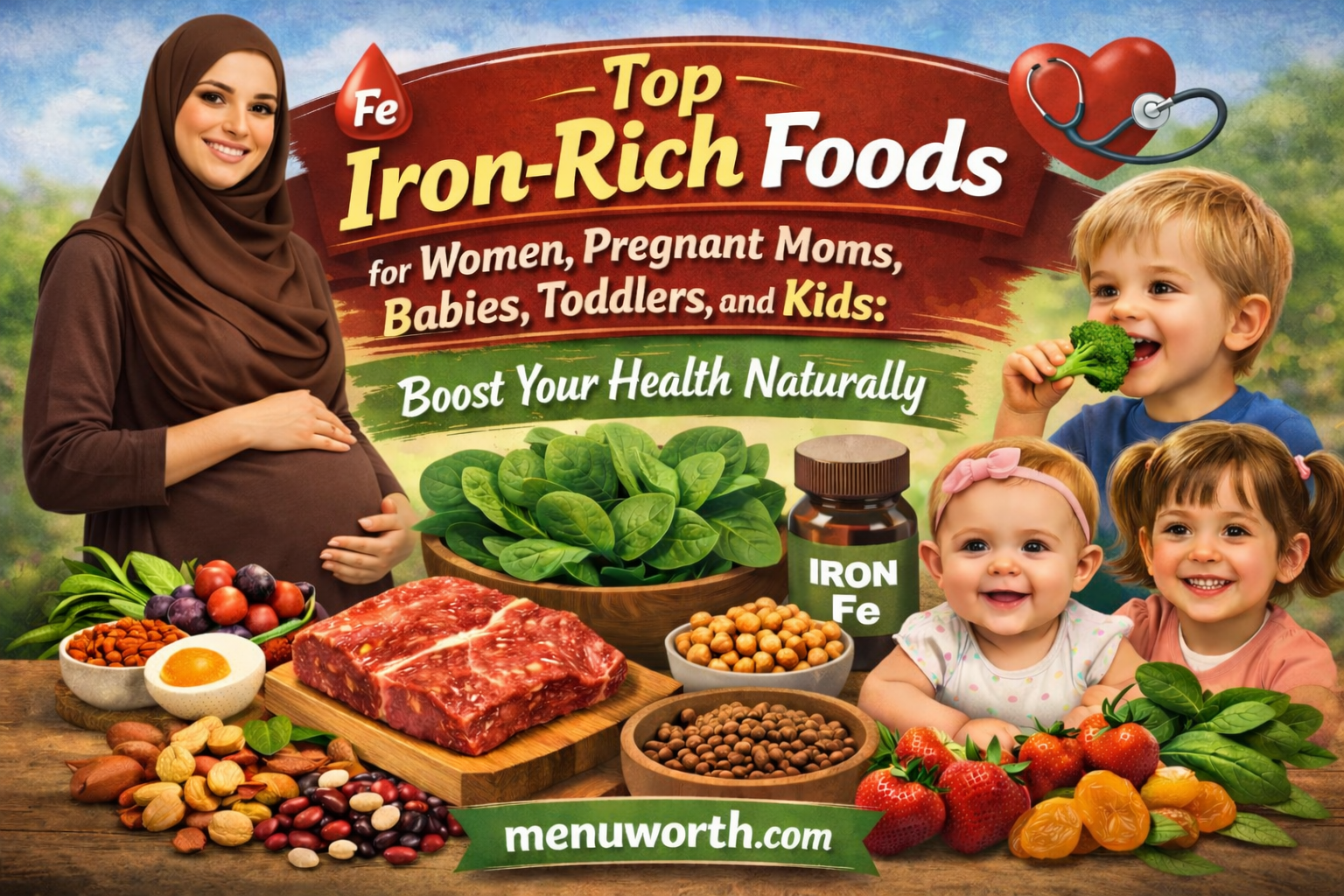
Iron is a crucial mineral for overall health, especially for women, pregnant mothers, babies, toddlers, and children. It plays a key role in producing hemoglobin, which transports oxygen throughout the body, boosting energy and cognitive function. The demand for iron is higher during pregnancy, infancy, and childhood when rapid growth occurs. Iron deficiency can lead to fatigue, weakness, and even anemia. For women, particularly those who are pregnant or menstruating, adequate iron ensures both mother and baby receive sufficient oxygen. Infants and toddlers need iron for growth and brain development. Fortunately, many iron-rich foods can be easily included in everyday meals to naturally boost iron levels. This guide will highlight the top iron-rich foods for better health and well-being.

Iron’s Role in the Body
Iron plays many vital roles in the body. It is necessary for the production of hemoglobin, which helps transport oxygen to tissues throughout the body. Without sufficient iron, the body can’t produce enough healthy red blood cells, leading to anemia. Symptoms of anemia include fatigue, weakness, and lack of concentration, which can severely affect daily life.
Iron is especially important for women due to menstruation, pregnancy, and breastfeeding. During pregnancy, a woman’s iron needs increase significantly to support the growing fetus. Infants, toddlers, and children also require adequate iron for their growth and brain development.
Recommended Daily Iron Intake
The recommended daily iron intake varies by age, gender, and life stage. Here’s the breakdown according to the National Institutes of Health (NIH):

- Women (19–50 years): 18 mg/day
- Pregnant women: 27 mg/day
- Breastfeeding women: 9–10 mg/day
- Infants (7–12 months): 11 mg/day
- Toddlers (1–3 years): 7 mg/day
- Children (4–8 years): 10 mg/day
- Boys and girls (9–13 years): 8 mg/day
Best Iron-Rich Foods for Women
Iron-rich foods help prevent iron deficiency and maintain good health. Here are some top sources of iron for women:

1. Spinach (Non-heme Iron)
Spinach is one of the best plant-based sources of iron and is rich in folate and vitamin C, which help improve iron absorption. One cup of cooked spinach contains approximately 6.4 mg of iron.
- Nutritional Benefits: High in antioxidants, fiber, and vitamins.
- How to Eat: Toss spinach into smoothies, salads, or sauté it as a side dish.
2. Red Meat (Heme Iron)
Red meat (such as beef and lamb) is an excellent source of heme iron, which is more easily absorbed by the body. Three ounces of lean beef contain about 2.1 mg of iron.

- Nutritional Benefits: Rich in protein, B-vitamins, and zinc.
- How to Eat: Grill steaks, stir-fry, or add to stews.
3. Lentils (Non-heme Iron)
Lentils are packed with plant-based iron, fiber, and protein. A half-cup serving provides about 3.6 mg of iron.
- Nutritional Benefits: High in folate, fiber, and antioxidants.
- How to Eat: Add lentils to soups, salads, or make veggie burgers.
4. Pumpkin Seeds (Non-heme Iron)
Pumpkin seeds are another excellent snack for increasing iron intake. One ounce of roasted pumpkin seeds provides about 2.5 mg of iron.
- Nutritional Benefits: High in magnesium, zinc, and healthy fats.
- How to Eat: Sprinkle on yogurt, salads, or enjoy as a snack.

5. Tofu (Non-heme Iron)
Tofu is a great plant-based protein and iron source, with about 3.5 mg of iron per 4 ounces.
- Nutritional Benefits: High in protein, calcium, and magnesium.
- How to Eat: Stir-fry with vegetables, or add to soups and curries.
Top Iron-Rich Foods for Expecting Moms
Pregnant women have significantly higher iron requirements due to the needs of the growing fetus. Here are some of the best iron-rich foods for pregnant women:

1. Eggs (Heme Iron)
Eggs are a great source of heme iron, providing about 1 mg of iron per egg. They are also rich in protein, vitamins, and minerals.
- Nutritional Benefits: High in protein, B12, and choline, which support brain health.
- How to Eat: Make omelets, scrambled eggs, or add eggs to salads.
2. Chicken (Heme Iron)
Chicken provides about 0.9 mg of iron per 3-ounce serving. It is a lean source of heme iron and contains protein and essential vitamins and minerals.
- Nutritional Benefits: Low fat and high in protein.
- How to Eat: Roast, grill, or use in salads and sandwiches.
3. Beans and Chickpeas (Non-heme Iron)
Beans and chickpeas are excellent sources of non-heme iron, providing about 4–5 mg of iron per half-cup serving.
- Nutritional Benefits: High in protein, fiber, and folate.
- How to Eat: Add to salads, stir-fries, or use in hummus.
4. Fortified Cereal (Non-heme Iron)
Many breakfast cereals are fortified with iron, making it an easy way to meet daily requirements. One serving of fortified cereal can provide up to 18 mg of iron.
- Nutritional Benefits: Packed with vitamins and minerals.
- How to Eat: Eat with milk or yogurt for a nutritious breakfast.
5. Dark Chocolate (Non-heme Iron)
Dark chocolate is rich in iron and antioxidants, providing approximately 3.5 mg of iron per ounce.
- Nutritional Benefits: Contains magnesium, copper, and antioxidants.
- How to Eat: Enjoy a square as a snack.
Baby and Toddler Foods That Are High in Iron
Iron is essential for the growth and development of babies and toddlers. Here are some iron-rich foods for young children:

1. Iron-Fortified Baby Cereal (Non-heme Iron)
Iron-fortified baby cereals are an excellent way to ensure infants get enough iron. A serving typically provides 4–6 mg of iron.
- Nutritional Benefits: High in iron, B-vitamins, and fiber.
- How to Serve: Mix with breast milk, formula, or water for a healthy meal.
2. Pureed Meat (Heme Iron)
Pureed meats such as beef, chicken, and turkey provide easily absorbed heme iron, which is vital for babies starting solid food.
- Nutritional Benefits: High in protein and zinc.
- How to Serve: Puree cooked meat and serve with baby-friendly vegetables.
3. Beans and Lentils (Non-heme Iron)
Beans and lentils are soft and easy to mash, making them ideal for babies and toddlers. A half-cup of cooked lentils provides about 3.6 mg of iron.
- Nutritional Benefits: High in protein, fiber, and folate.
- How to Serve: Mash or puree with baby-safe vegetables.
4. Tofu (Non-heme Iron)
Tofu is an excellent plant-based iron source for infants and toddlers. It provides about 3.5 mg of iron per 4 ounces and is soft and easy to chew.
- Nutritional Benefits: High in protein, calcium, and magnesium.
- How to Serve: Mash or cube tofu for babies and toddlers.
5. Spinach and Other Leafy Greens (Non-heme Iron)
Leafy greens like spinach are rich in iron and other essential nutrients. Cooking spinach helps break it down, making iron absorption easier.
- Nutritional Benefits: High in iron, vitamins, and antioxidants.
- How to Serve: Puree spinach and serve with other veggies or in soups.
Best Iron-Rich Foods for Kids
Iron is critical for children’s growth and cognitive development. Here are some iron-rich foods that kids will enjoy:
1. Lean Red Meat (Heme Iron)
Lean red meat is an excellent source of heme iron, which is crucial for children’s development. A 3-ounce serving of lean beef provides approximately 2.1 mg of iron.
- Nutritional Benefits: High in protein and B-vitamins.
- How to Serve: Serve as burgers, tacos, or stir-fried with vegetables.
2. Fortified Cereals (Non-heme Iron)
Fortified cereals are a convenient and effective way for kids to get enough iron. A serving of iron-fortified cereal can provide up to 18 mg of iron.
- Nutritional Benefits: High in iron, fiber, and vitamins.
- How to Serve: Serve with milk or mix with yogurt for extra calcium.
3. Pumpkin Seeds (Non-heme Iron)
Pumpkin seeds are packed with iron. A 1-ounce serving of roasted pumpkin seeds provides about 2.5 mg of iron.
- Nutritional Benefits: Rich in magnesium, zinc, and fiber.
- How to Serve: Add to trail mix, or sprinkle on oatmeal or yogurt.
4. Chickpeas (Non-heme Iron)
Chickpeas are an excellent source of iron and can be easily incorporated into kids’ meals. A half-cup serving of cooked chickpeas provides about 2.4 mg of iron.
- Nutritional Benefits: High in protein, fiber, and folate.
- How to Serve: Prepare chickpea hummus or add to soups and stews.
5. Sweet Potatoes (Non-heme Iron)
Sweet potatoes are a great source of iron, beta-carotene, and fiber. A medium-sized sweet potato contains around 1.5 mg of iron.
- Nutritional Benefits: High in vitamins and antioxidants.
- How to Serve: Roast, mash, or add to soups and stews.
FAQs About Iron-Rich Foods
What is the importance of iron for pregnant women?
Iron is crucial during pregnancy as it supports the development of the placenta and fetus. It also helps prevent iron-deficiency anemia, which can lead to complications.
Can breast milk provide enough iron for babies?
Breast milk provides sufficient iron for the first six months of life. After that, iron-rich solid foods should be introduced to continue supporting growth.
What happens if you eat too much iron?
Excessive iron intake can lead to iron poisoning, causing nausea, constipation, and organ damage. It is important to balance iron intake and consult a healthcare provider when needed.
What are the symptoms of iron deficiency in toddlers?
Symptoms of iron deficiency in toddlers include fatigue, pale skin, poor appetite, and difficulty concentrating. If you notice these symptoms, consult a pediatrician.
How can I boost iron absorption in the body?
To improve iron absorption, consume iron-rich foods with vitamin C-rich foods (like citrus fruits or bell peppers). Avoid drinking tea or coffee with iron-rich meals, as they can inhibit absorption.
Conclusion
Iron is a vital nutrient that plays an essential role in maintaining growth, development, and overall health. Women, pregnant mothers, babies, toddlers, and children all have unique iron requirements. By incorporating iron-rich foods such as leafy greens, lean meats, legumes, and fortified cereals into the diet, you can ensure that your family receives adequate iron and enjoys better health naturally. Remember to combine iron with vitamin C-rich foods to maximize absorption and support overall well-being.